

Marketing teams are under increasing pressure to make every campaign work harder. While digital remains an important part of the marketing mix, brands are also looking for ways to create meaningful, memorable experiences that put them directly in front of the people they want to reach.
That is where the roadshow event comes in.
From city-centre brand activations and product demonstrations to recruitment campaigns and national tours, roadshow events give brands the opportunity to take a consistent experience to audiences across multiple locations.
At The Events Structure, we work with experiential agencies and marketing teams to help bring these campaigns to life, providing branded event structures that can travel from location to location while creating a strong and consistent physical presence at every stop.
Here are seven reasons why roadshow events continue to play an important role in brand marketing in 2026.
What is a roadshow event?
A roadshow event is a touring activation that takes a brand, product, service or experience to audiences across multiple locations.
Unlike a one-off event, the same core experience moves between destinations, allowing brands to engage different audiences while maintaining a recognisable and consistent campaign identity.
The format can vary considerably. A roadshow might use a compact exhibition trailer for a multi-location sampling campaign, a customised shipping container transformed into an immersive brand environment, or a larger exhibition trailer designed to create a substantial mobile showroom or hospitality space.
The right structure depends on the campaign, locations, audience and creative vision.
1. Roadshow events take the brand to the audience
One of the biggest advantages of a roadshow event is simple: rather than asking audiences to come to you, you can take the brand experience directly to them.
A carefully planned route can bring a campaign into city centres, retail environments, universities, festivals, sporting events and other locations where the target audience is already spending time.
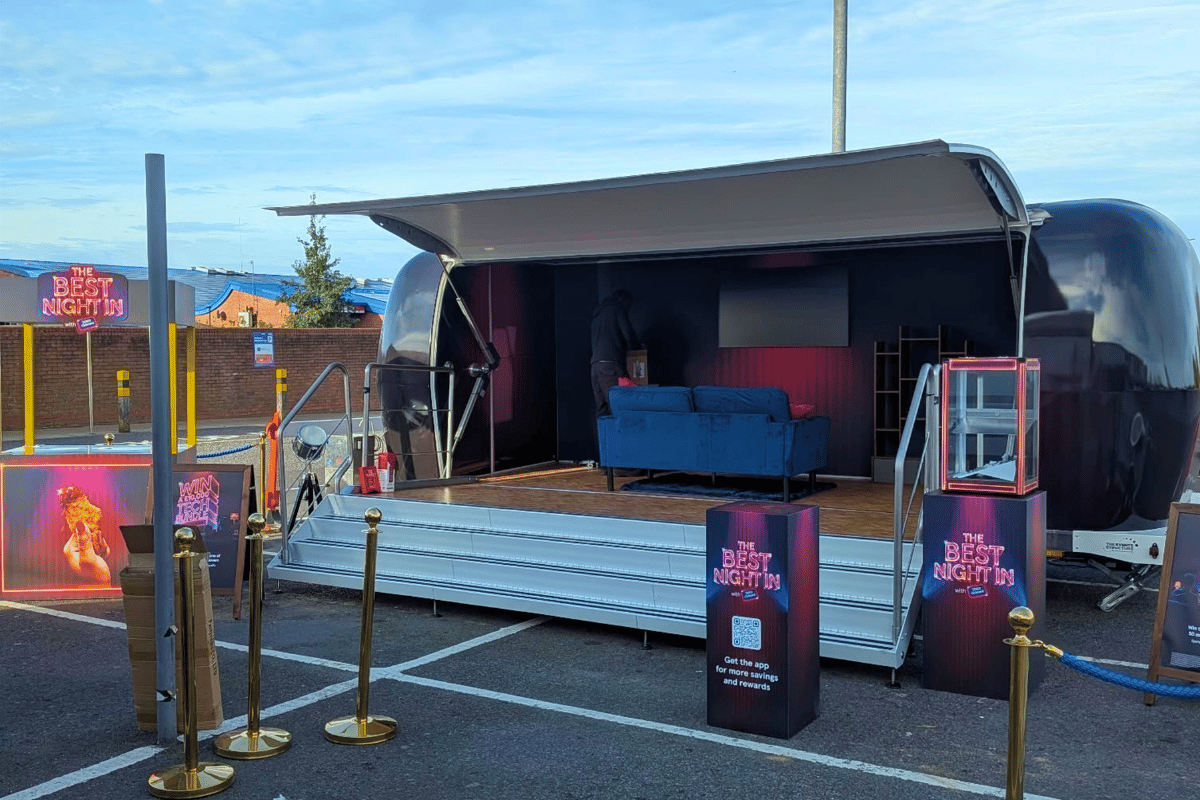
TES is currently supporting a touring Tesco campaign using our Explorer exhibition trailer, with the activation travelling through locations across the North East and Scotland.
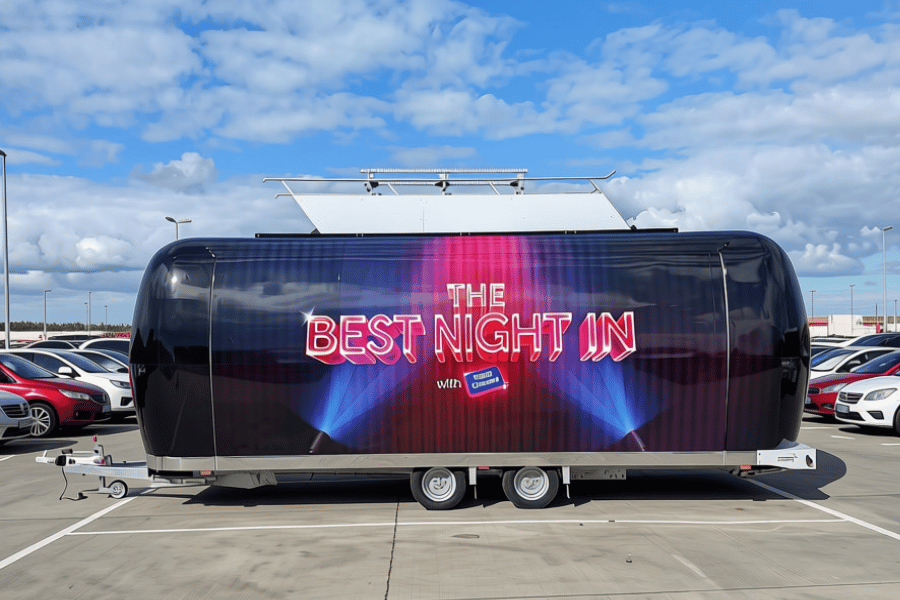
The route includes Middlesbrough, Hartlepool, Durham, Sunderland, Newcastle, Edinburgh and several locations around Glasgow, among others.
A compact and highly manoeuvrable exhibition trailer, Explorer is particularly suited to touring campaigns because it can be quickly deployed and offers extensive internal and external branding opportunities.
Rather than relying on one destination to attract a large audience, the campaign can move directly through multiple communities.
2. Face-to-face experiences create meaningful engagement
Digital advertising can create reach, but physical experiences give audiences the opportunity to interact with a brand in an entirely different way.
People can step inside a branded environment, speak directly to representatives, see or try products, participate in demonstrations and spend meaningful time with the brand.
For campaigns built around sampling, education, recruitment, launches or demonstrations, that interaction can be particularly valuable.
A roadshow event therefore becomes more than advertising space. It creates an environment where a brand can start conversations and build genuine connections with its audience.
3. A roadshow can target a very specific audience
Successful roadshows aren't simply about finding the busiest locations. They are about finding the right locations.
A route can be planned around where a particular audience is most likely to be found, whether that means universities, retail parks, industry events, festivals or city centres.
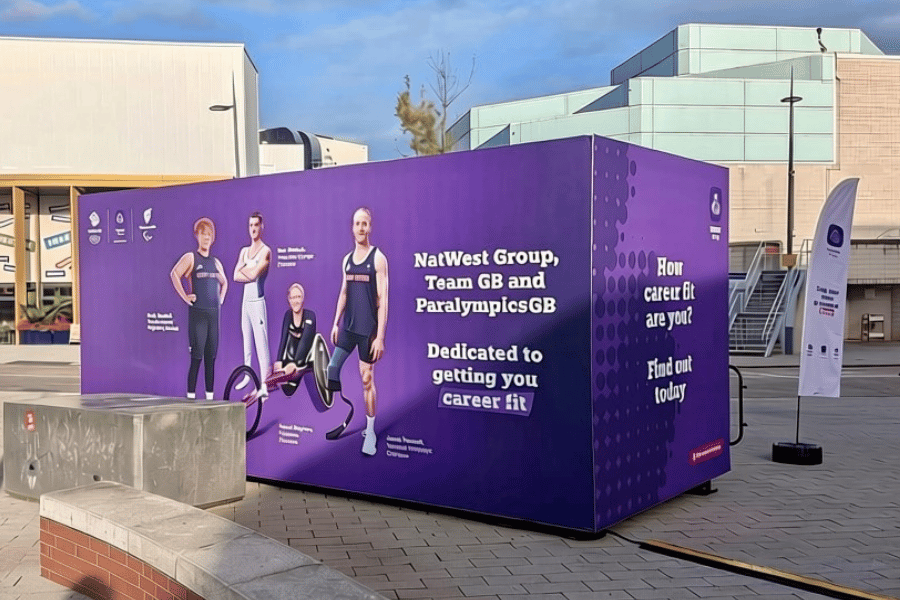
Our work with NatWest demonstrates this particularly well.
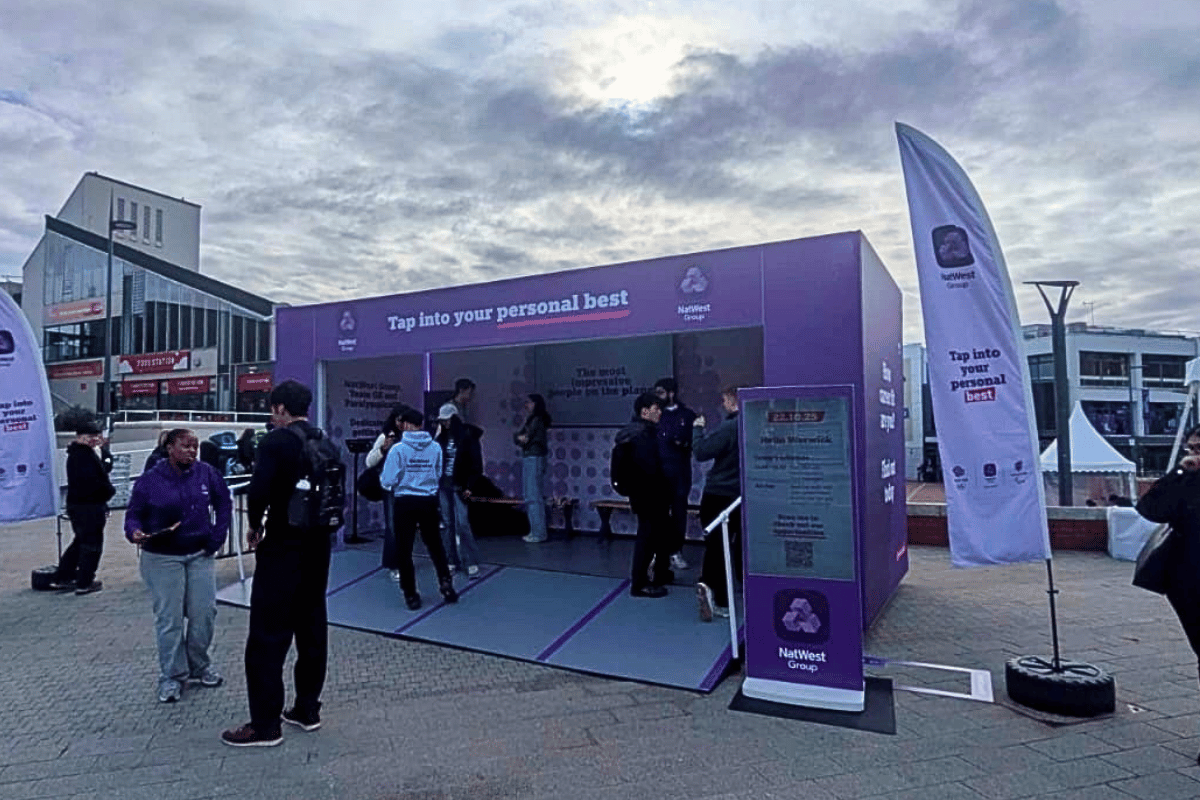
A branded Gallery Plus customised container travelled to graduate recruitment fairs in Glasgow, Edinburgh, Warwick and London, giving NatWest a consistent physical environment from which to engage prospective graduates at multiple events.
Instead of waiting for the target audience to encounter the campaign elsewhere, the roadshow format allowed the activation to travel directly to environments where prospective graduate recruits were already gathered.
4. One campaign can work across very different locations
One of the strengths of the roadshow format is its flexibility.
The same core activation can move between cities, venues and established events while retaining the creative concept and recognisable brand identity.
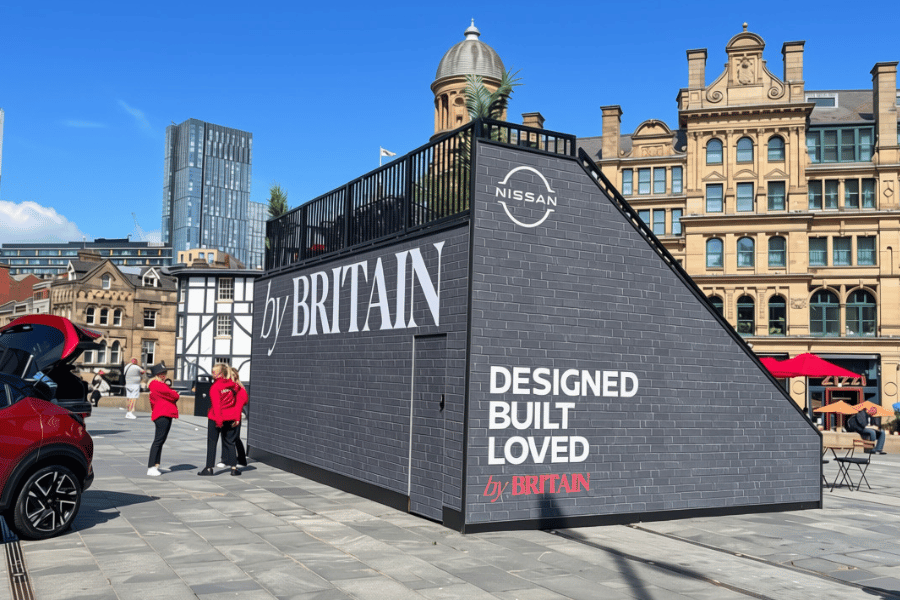
The NissanByBritain tour, delivered for experiential agency Fusion 2K, is a good example.
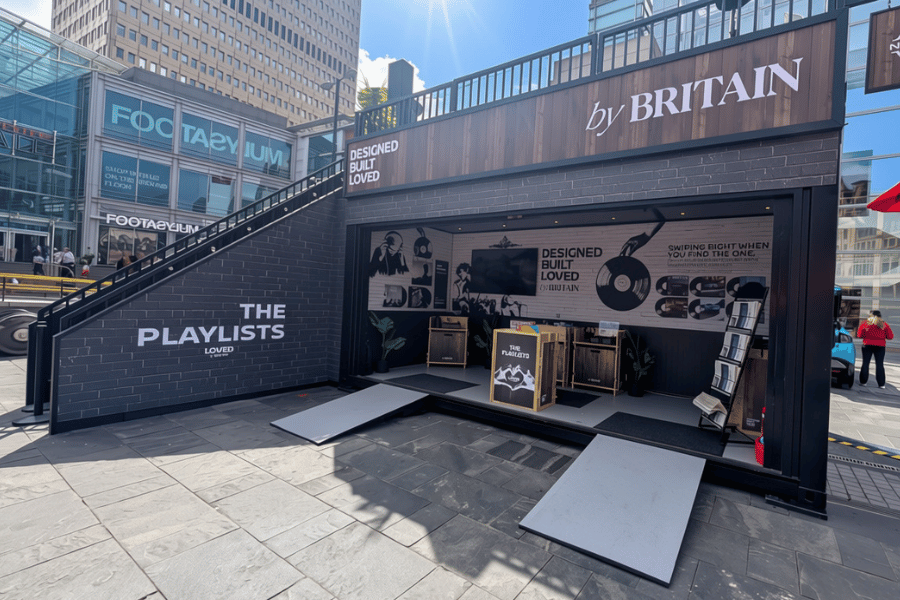
Using our Impact Plus customised container, the campaign travelled from Manchester city centre to Bristol and London, before appearing at CarFest and continuing to Edinburgh.
That route demonstrates how a roadshow event can combine different types of destination within one campaign.
A city-centre activation and a major established event present very different environments, but the physical brand space can travel between them, creating continuity throughout the tour.
5. Brands can create a consistent environment at every stop
Consistency is one of the biggest challenges of a multi-location campaign.
Different venues inevitably have different footprints, surroundings and operational requirements. The brand experience, however, still needs to feel recognisable wherever audiences encounter it.
A mobile structure helps create that consistency.
Branding, graphics, interiors, displays, demonstration areas and customer-facing spaces can all be designed around the campaign before the tour begins.
The environment then travels with the campaign.
This gives agencies and marketing teams a physical foundation around which the wider activation can be delivered, helping the creative concept remain consistent from the first location to the last.
6. Roadshow events are highly scalable
There is no single format for a roadshow event.
Some campaigns require a compact footprint that can move quickly between busy locations. Others need considerably more space for hospitality, demonstrations, product displays or immersive experiences.
That flexibility allows the physical environment to be matched to the ambition of the campaign.
At The Events Structure, our fleet ranges from compact promotional vehicles and exhibition trailers to customised shipping containers and large expandable exhibition trailers.
For example, Explorer provides a compact solution for campaigns where mobility and quick deployment are priorities, while structures such as Gallery Plus and Impact Plus create larger branded environments with extensive opportunities for customisation.
The important consideration isn't simply choosing the biggest structure available. It is choosing the structure that best supports the audience, locations and objectives of the campaign.
7. Physical experiences can cut through a crowded digital landscape
Consumers encounter marketing messages throughout the day, particularly online.
A physical brand environment creates a very different type of interaction.
A striking branded structure in a city centre, festival, university or retail environment can become a destination in its own right, encouraging people to stop, explore and interact.
It can also provide the backdrop for photography, video and social content, allowing the physical activation to contribute to the wider campaign beyond the people who experience it in person.
For marketing teams planning integrated campaigns, a roadshow event can therefore work alongside digital, PR and social activity rather than competing with them.
Choosing the right structure for a roadshow event
The structure is one of the most important practical decisions when planning a roadshow.
Considerations include the number and type of locations, available footprint, transport requirements, setup time, visitor numbers, accessibility, branding requirements and what audiences actually need to do once they enter the space.
A sampling campaign visiting multiple retail locations, for example, may need something compact and quick to deploy.
A graduate recruitment roadshow might prioritise an inviting space where representatives can hold conversations with prospective applicants.
A high-profile consumer campaign may require greater height, viewing areas or a substantial branded presence designed to attract attention in busy environments.
This is why the structure should be considered as part of the creative process rather than simply the means of transporting the activation between locations.
Bringing a roadshow vision to life
The most effective roadshow events bring together strong creative thinking with a physical environment capable of delivering that idea repeatedly.
At The Events Structure, we work alongside experiential agencies and marketing teams to support that process.
Our role is to help turn the creative vision into a practical, branded event environment — whether that means adapting one of our existing exhibition trailers or customised containers, or developing a solution around the specific requirements of the campaign.
With structures designed for touring, branding and repeated deployment, agencies and marketing teams can concentrate on creating the experience while we help provide the physical platform that brings it to life.
From compact regional campaigns to multi-city tours, the roadshow format gives brands something increasingly valuable: the ability to take a memorable, consistent experience directly to the audiences they want to reach.
Planning a roadshow event?
Talk to The Events Structure about your campaign, locations and creative brief, and we'll help you find the right structure to bring your vision to life.
Want to read more about roadshows?
Explore more insights, ideas and practical advice for planning a successful brand roadshow:
How Omoda Jaecoo Turned Heads Across Europe with Premium Exhibition Units
Maximising Impact with a Marketing Trailer Lessons from Canon Roadshow